
Mobilizing Women
Campagna Center has a long history of service, which begins with its founding as a part of the YWCA. An international organization established by women, the YWCA emerged in the 1850s to support single women in need of housing, education, and other assistance as they entered the industrial labor market in Europe. In 1860, the first boarding house linked to the effort opened in New York, providing shelter to female students, teachers, and factory workers, and in 1866 the term “YWCA” was first used in Boston to mark the connection to the international organization.
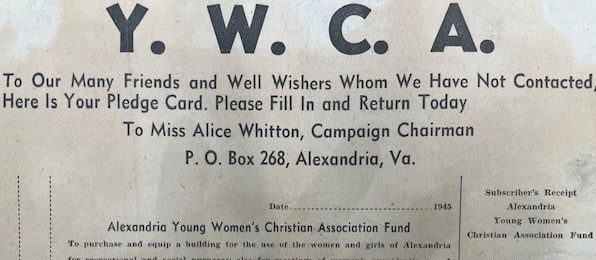
Approximately 80 years later, in 1945, the Alexandria YWCA was granted its charter to operate. Ambitious from the start, its founders set a bold goal of raising $50,000: $42,000 to purchase a facility for the Alexandria branch and support its initial operating needs, and $8,000 to cover the same expenses for a separate facility, the Phyllis Wheatley Branch for Negro Women (later named the Bethune Cookman Branch). The campaign was launched in June 1945, and by September 1945 enough money had been raised to purchase a home for the organization at 602 Cameron Street. Jean Williams served as the first Executive Director.
Seeing Community Needs
True to the mission of the YWCA at that time, members had access to a wide range of classes, from realty investment to sewing, drawing, painting, French, cake decorating, and many other self-improvement courses.
Beyond classes, members would also gather for social activities, and membership fees were an early feature of how the organization generated funds to sustain itself.
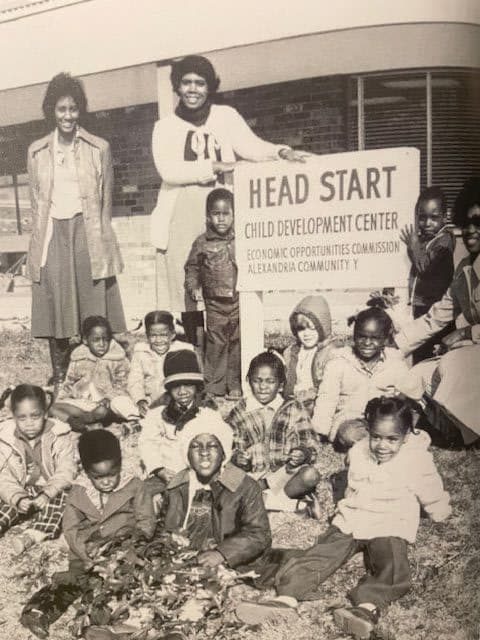
During the 1960s, the Alexandria YWCA launched programs that went beyond its original offerings, programs that sought to meet the needs of city residents who lacked access to opportunities or needed help, including people outside the membership base of the YWCA. For example, in 1968, Elizabeth Anne created a women’s correctional program. When a local judge sentenced a young woman to incarceration, Alexandria YWCA volunteers would visit them at the “city jail” to build relationships and engage them in positive activities. At the same time, the organization, through a partnership with the city government, began to help administer Alexandria’s Head Start programming. Wherever Elizabeth Anne Campagna saw a need, she found a way to organize volunteers and the “Y” to address it. In 1969, she created the Junior Friends to support the organization, particularly its fundraising needs. Junior Friends were instrumental in planning the Scottish Walk as a way to thank the city for its support and to raise funds to support the mission.
Elizabeth Anne Campagna

In 1961, Betty Wright, who was serving as Interim Executive Director, along with Bunny Jacobs, who was serving as Board President, played key roles in the hiring of Elizabeth Anne Campagna, who came on as Director in 1962. Her appointment marked an important transition for the organization. The organization affiliated with the YWCA of the National Capital Area (NCA) in 1963 for the benefit of accessing resources to underpin its work.
While the Alexandria YWCA continued to offer classes and experiences that catered to the needs of its members, Elizabeth Anne was also deeply concerned about social issues impacting women and children in the community. Furthermore, she understood the important role that volunteers could play in helping to draw attention to these issues. She smartly combined the membership structure of the YWCA with an opportunity to engage more women in supporting the needs of their city’s underserved residents, especially children and youth.
In 1985, Elizabeth Anne retired from service, and in 1990, to honor her extraordinary service, the Board of Directors voted to change the name of the organization to The Campagna Center.
Embracing Change
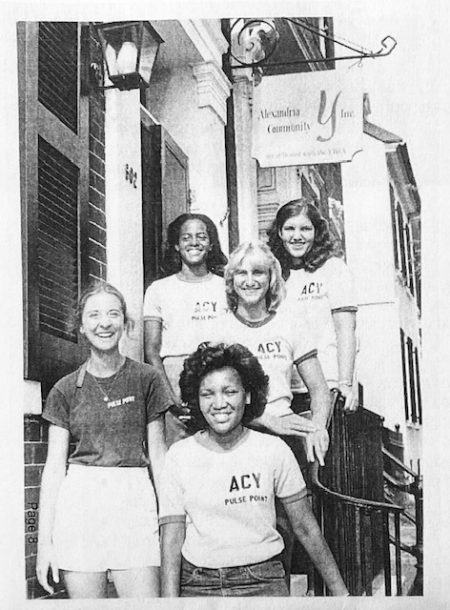
In 1973, ten years after affiliating with the YWCA of the NCA, the Alexandria branch voted to seek reinstatement as an independent chapter following disagreements over operational affairs. The national YWCA denied the request. In response, on January 4, 1974, the organization voted to change its name to the Alexandria Community Y (ACY). Though the national YWCA then sued for trademark infringement, it lost, and in the fall of 1974, a judge ruled that the ACY could maintain its name, as long as the organization included a disclaimer on its materials for two years that read “not affiliated with the YWCA.”
Centering Children & Youth
As the ACY entered the end of the 1970s, more programs came into existence, always responsive to emerging needs. In 1979, a Women’s Resource Center was established, offering women and other members of the community a place to go to access resources. It catered to women who wanted to explore different options than they had previously known, ranging from women between school and their first job or those experiencing marriage, separation, divorce, or recent widowhood. All were welcome to reach out and find support among the staff and volunteers who operated the Center.
Other offerings aided those suffering from mental health issues, and in 1984, the ACY established This Way House, a crisis intervention program that provided counseling and shelter for runaway, homeless, and/or abused youth. Many other programs were established during this period, including Campagna Kids, Wright to Read, and the Retired Senior Volunteer Program.
Embracing the Strength of Partnerships
The arrival of the 21st Century brought more opportunities for Campagna to build upon its successes and increase its offerings. In 2003, the organization formed a partnership with Benvenidos to address the needs of Latino students at the local high school. This program (now known as Building Better Futures, a Campagna Center program) focused on mentoring and was designed to provide much-needed assistance as more families emigrated from Central America to Alexandria.
Campagna extended its preschool work to reach infants and toddlers with the creation of its Early Head Start Program. In 2011, the New Neighbors English Language Program, which originated at Christ Church, became a program of the Center to serve immigrants and refugees interested in learning English for the benefit of accessing better opportunities. 2015 saw the further expansion of Early Head Start via partnerships with several women-owned family childcare businesses in Alexandria. In 2017, Wright to Read returned home and became a program of Campagna rather than maintaining its status as an independent entity.
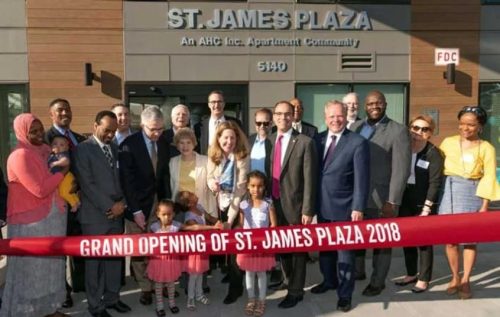
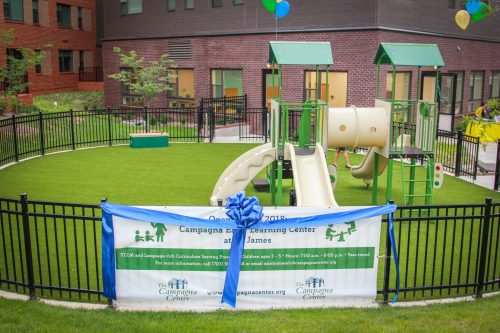
And, Campagna opened its own Early Learning Center (pictured) in 2018 to expand its ability to reach under-resourced families in need of child care.
Harnessing the Power of Volunteers
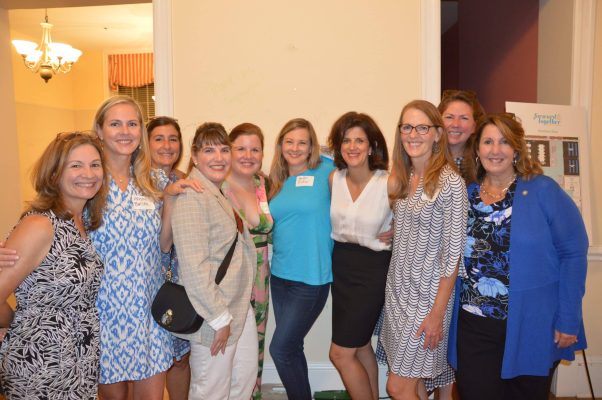
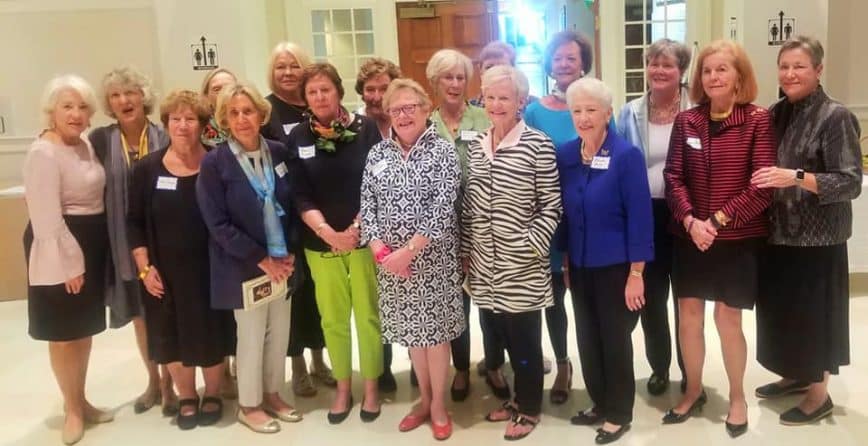
Throughout the decades, Campagna’s story, and its impact, have always been deeply rooted in a culture that values the power of working together to achieve great things. This was undoubtedly due to the leadership of Elizabeth Anne and her unique ability to foster unity and shared purpose. Our reach into the community is aided by the rich partnerships we maintain with public and private institutions. And we are ever indebted to the contributions of volunteers who have donated their time, talent, and treasure to the mission, from our Board of Directors to our Junior Friends, Supporting Friends, and now Friends of Campagna.
Bridging Gaps to Foster Equity in Opportunity
Today, we continue to center children at the heart of our work, always in the context of families and community. We envision a day when everyone we serve can realize their full potential: as students, family members, workers, citizens, creators—whatever they choose. And we believe this goes beyond the individual, as each person who achieves their promise becomes a force to help the next generation do the same. Our work, the things we do every day, are focused on creating these ripples of opportunity. This work is core to our identity. It is also a collective effort. From volunteers to donors to local schools, faith institutions, committed businesses, city agencies, and partner nonprofits, our work is truly accomplished by a village. United, we can create a better future, one where optimism and hope always shine brightly.
